Onchain crypto loan strategy limits to account for
Building an onchain crypto loan strategy requires navigating a landscape defined by smart contract risk and liquidity fragmentation. Unlike traditional finance, where underwriting relies on credit scores and legal recourse, onchain lending depends entirely on overcollateralization and code auditability. This fundamental difference means that strategy is less about finding the lowest rate and more about managing the specific risks inherent to decentralized infrastructure.
Liquidity is rarely pooled in a single destination. Protocols like Morpho operate as open credit networks, allowing lenders to optimize rates by matching borrowers directly while still plugging into broader liquidity pools. This structure offers better yields for lenders and lower rates for borrowers, but it fragments capital across multiple layers. A robust strategy must account for this fragmentation, ensuring that capital is deployed where it can be efficiently utilized without becoming trapped in illiquid positions.
Risk assessment also shifts from institutional guarantees to technical verification. Onchain private credit, for instance, allows users to pool funds onchain while deploying them through offchain agreements. This hybrid model introduces counterparty risk that does not exist in pure lending protocols. Evaluating these strategies requires looking beyond APY and examining the underlying code audits, the stability of the collateral assets, and the legal enforceability of any offchain components involved.
Onchain crypto loan strategy choices that change the plan
Building a lending strategy requires balancing liquidity, cost, and control. You are choosing between the ease of centralized platforms and the transparency of decentralized protocols. Each approach carries distinct risks regarding counterparty failure and smart contract exposure.
Centralized vs. Decentralized Models
Centralized exchanges (CEXs) offer a familiar user experience with fiat on-ramps and customer support. However, you surrender custody of your assets to the platform. If the exchange faces insolvency, your collateral is at risk, as seen in past industry failures. Decentralized Finance (DeFi) protocols require self-custody and technical literacy but eliminate single points of failure.
Loan-to-Value (LTV) Ratios
The Loan-to-Value ratio determines how much you can borrow against your collateral. Higher LTVs offer more liquidity but increase the risk of liquidation if asset prices drop. Most platforms cap initial LTVs between 50% and 75%. Maintaining a buffer below the liquidation threshold is essential to avoid forced sales during market volatility.
Interest Rate Structures
Interest rates vary significantly based on supply and demand. Centralized loans often offer fixed rates for set terms, providing predictability. DeFi protocols typically use variable rates determined by algorithmic models. In periods of high demand, borrowing costs in DeFi can spike sharply, impacting your profitability.
Protocol Risk and Insurance
DeFi protocols are vulnerable to smart contract bugs and exploits. While code audits reduce this risk, they do not eliminate it. Some platforms offer insurance funds to cover losses from hacks, but coverage is rarely comprehensive. Centralized lenders assume this operational risk, but their financial stability becomes your primary concern.
| Feature | Centralized (CEX) | Decentralized (DeFi) |
|---|---|---|
| Custody | Platform holds assets | Self-custody (Wallet) |
| Interest Rates | Often fixed | Variable (Algorithmic) |
| Privacy | KYC required | Permissionless |
| Recovery | Customer support | No central support |
| Primary Risk | Counterparty insolvency | Smart contract exploit |
How to choose the right onchain lending strategy
Selecting a lending protocol requires matching your asset liquidity needs with the platform's risk model. Unlike traditional banks, onchain lending moves fast, and the "best" platform shifts based on interest rate volatility and collateral requirements. Use this framework to evaluate options before locking up capital.

Every protocol sets a maximum loan-to-value (LTV) ratio. If you deposit $10,000 in ETH, a 50% LTV lets you borrow $5,000. Check if the platform allows volatile altcoins or restricts you to blue-chip assets like Bitcoin and Ethereum. Lower LTVs reduce liquidation risk but limit your borrowing power.
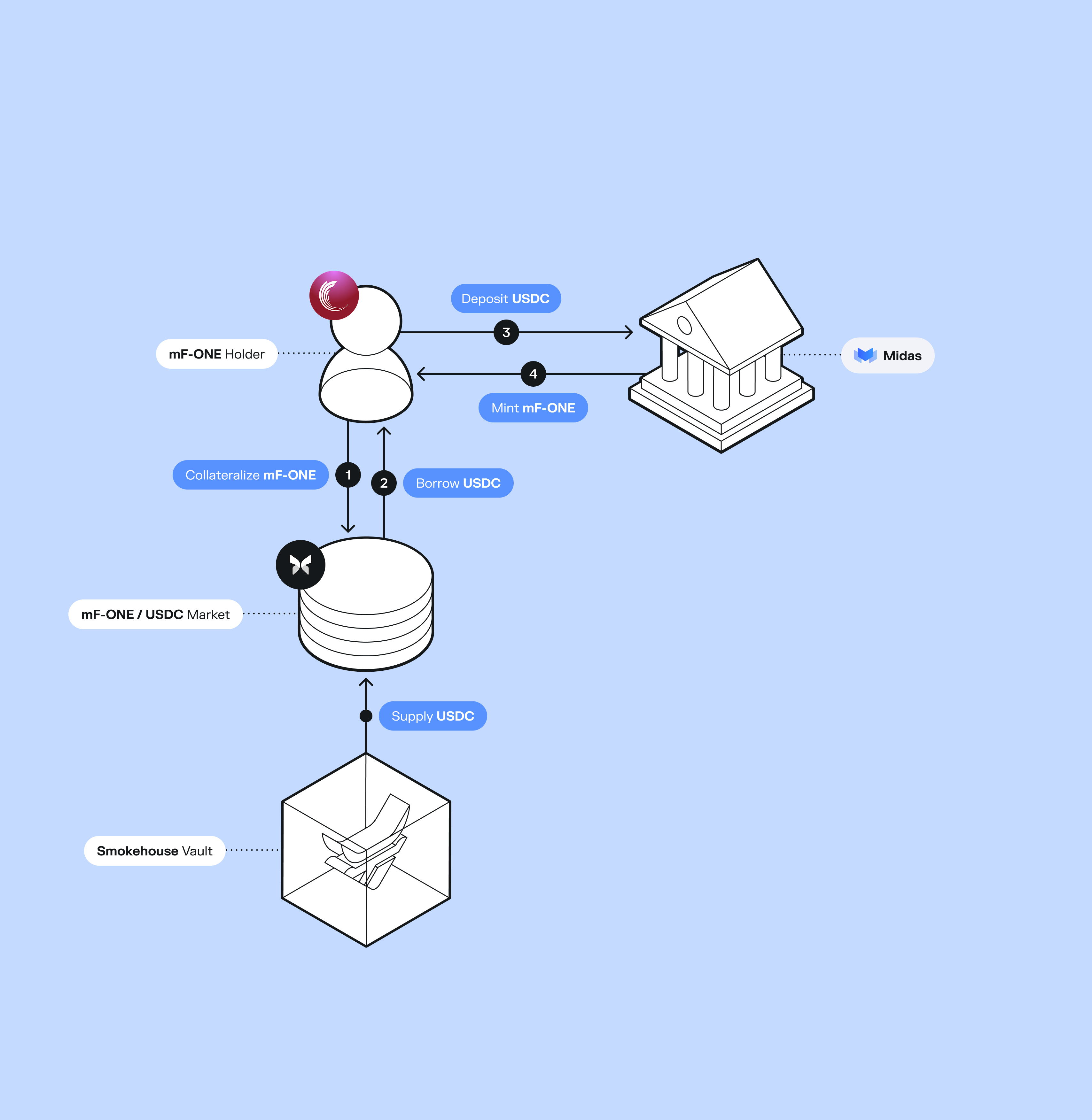
Most onchain loans use variable rates that fluctuate with supply and demand. Some newer platforms offer fixed-rate terms for stability. If you plan to hold the loan long-term, a fixed rate protects against market spikes. For short-term liquidity needs, variable rates often start lower but can surge quickly.

Smart contract risk is the primary threat in onchain lending. Prioritize protocols with multiple independent security audits and a proven track record of handling millions in TVL (Total Value Locked). Platforms like Morpho offer modular architectures that allow for greater flexibility but require deeper technical due diligence.
Can you repay your loan instantly? Some platforms lock your collateral for a set period, while others allow immediate withdrawal upon repayment. Ensure the platform supports the blockchain you are using (e.g., Ethereum, Arbitrum, Base) and check for any bridge delays or gas fee spikes that could complicate repayments.


As an Amazon Associate, we may earn from qualifying purchases.
Spotting Weak Options in Onchain Lending
The onchain lending market has matured, but so have the red flags. Before committing capital to any protocol, you need to distinguish between robust infrastructure and misleading marketing. Many platforms promise "instant liquidity" while hiding complex smart contract risks or low liquidity pools behind flashy dashboards.
Common Pitfalls to Avoid
Misleading APY Claims Many protocols advertise high yields without disclosing the risk-adjusted return. Always check the underlying asset composition. A 15% APY might seem attractive, but if it comes from volatile, low-liquidity tokens, you could lose principal value faster than interest accrues.
Opaque Liquidation Mechanisms Weak options often use aggressive liquidation thresholds that can trigger sudden asset sales during minor market dips. Review the protocol’s liquidation logic. Protocols like Morpho offer more transparent credit networks, but you must still verify the specific pool’s health.
Regulatory Ambiguity Some platforms operate in legal gray areas, especially those involving off-chain agreements for on-chain assets. Ensure the platform complies with your local regulations. Galaxy Research highlights the rise of onchain private credit, but emphasizes the need for due diligence on off-chain components.
How to Evaluate a Platform
- Check Liquidity Depth: Ensure there is enough capital to handle your loan size without slippage.
- Review Smart Contract Audits: Look for recent, reputable audits. Unaudited code is a significant risk.
- Understand Collateral Requirements: Know the exact loan-to-value (LTV) ratio and how it changes with market volatility.
- Assess Platform Longevity: Established platforms have survived market cycles; new ones have not.
Conclusion
Onchain lending offers unique opportunities, but it requires careful scrutiny. Avoid platforms with unclear terms, low liquidity, or unverified audits. Focus on transparency and robust infrastructure to protect your capital.
Onchain crypto loan strategy: what to check next
What is onchain lending?
Onchain lending moves credit intermediation from bank servers to blockchain protocols. Users deposit collateral into smart contracts to unlock liquidity, while lenders provide capital directly from their wallets. This structure removes the traditional institution from the middle, allowing for permissionless access and transparent risk parameters.
Are crypto-backed loans a good idea?
These loans let you access cash without selling your assets, which helps you avoid triggering immediate capital gains taxes. However, you must manage the risk of liquidation if your collateral value drops below the protocol’s threshold. They are best suited for holders who want to maintain long-term market exposure while meeting short-term cash needs.
What is the best platform for crypto loans?
No single platform dominates all use cases. Decentralized options like Morpho offer open credit markets with competitive rates, while centralized exchanges provide familiar user interfaces. The right choice depends on your priority: maximum yield and privacy on decentralized protocols, or ease of use and fiat integration on centralized exchanges.
Can I borrow a loan on crypto?
Yes, you can borrow against digital assets like Bitcoin or Ethereum. You deposit your crypto as collateral, and the protocol lends you stablecoins or other assets. You must repay the loan with interest within a set timeframe, or the protocol will automatically sell your collateral to cover the debt.
No comments yet. Be the first to share your thoughts!