Onchain lending market overview
The onchain crypto loan market has moved past its fragile early years and is now showing clear signs of structural recovery. After bottoming out during the bear market, open borrow volumes have climbed steadily, signaling renewed confidence in decentralized finance protocols. This isn't just a temporary spike; it reflects a broader stabilization of the lending infrastructure that supports the wider crypto economy.
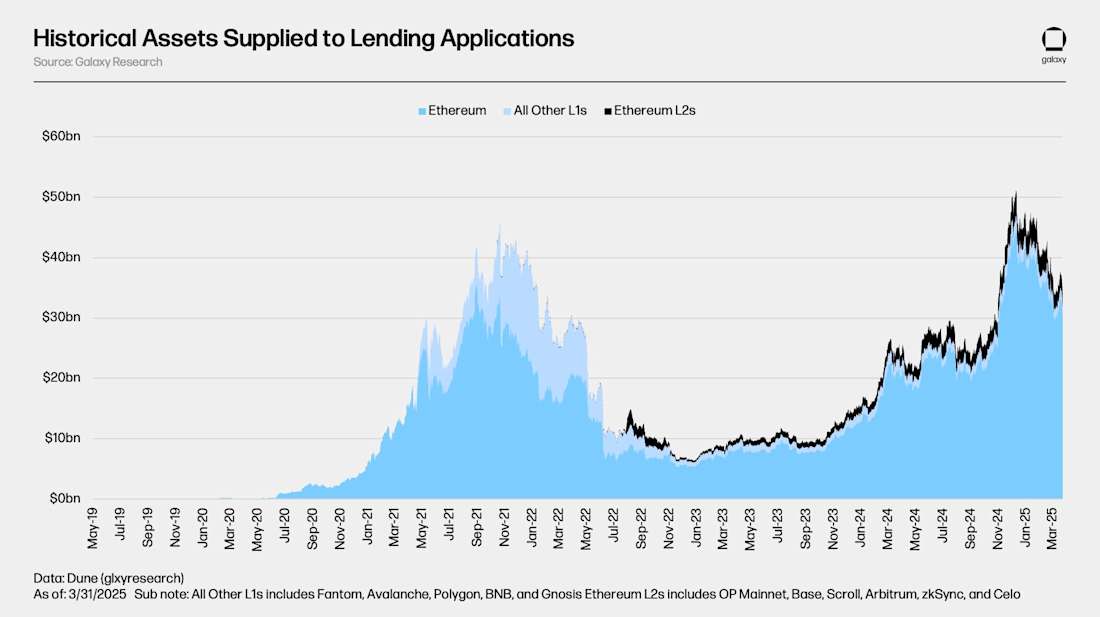
Data from Galaxy Research highlights this trajectory, noting that onchain lending applications have experienced strong growth since hitting their lowest point at $1.8 billion in open borrows. The sector has since recovered significantly, with usage reaching all-time high levels by late 2024. Coinbase Institutional research reinforces this trend, suggesting that the sector will continue to expand as the overall onchain economy matures. The shift from speculative borrowing to more sustainable, utility-driven lending is evident in these figures.
Looking ahead, the market's expansion appears well-supported by long-term projections. The crypto lending platform market was valued at approximately USD 12.69 billion in 2026 and is projected to reach USD 25.06 billion by 2030, growing at a compound annual growth rate of 18.5%. This steady ascent indicates that onchain lending is becoming a permanent fixture in the financial landscape, rather than a fleeting experiment.
To visualize this growth, we can look at the total value locked in major DeFi lending protocols. The chart below tracks the aggregate liquidity flowing into these systems, providing a clear view of how capital has flowed back into the sector over recent years.
Comparing lending protocol models
The onchain crypto loan market research landscape is split between two distinct approaches: overcollateralized lending and undercollateralized lending. Understanding the mechanics of each model is essential for navigating risk and accessibility in decentralized finance.
Overcollateralized lending is the backbone of traditional DeFi. Protocols like Aave and Compound require borrowers to lock up more crypto assets than the value of the loan. This structure eliminates credit checks but creates a high barrier to entry, as users must tie up significant capital. It is a system built on transparency and algorithmic risk management, where the collateral itself serves as the primary guarantee.
Undercollateralized lending represents the next evolution, leveraging onchain credit scores to offer loans with less upfront collateral. This model mirrors traditional finance by assessing a borrower’s history and reputation. While it opens access to users who lack large crypto holdings, it introduces complexity in data verification and credit risk assessment. As noted in industry analyses, this shift aims to move lending from pure speculation toward utility-driven finance.
The following table breaks down the core differences between these two lending structures.
| Feature | Overcollateralized | Undercollateralized |
|---|---|---|
| Collateral Requirement | >100% of loan value | <100% or zero collateral |
| Credit Assessment | None (algorithmic) | Onchain credit scores |
| Target User | Crypto-native investors | Established borrowers |
| Risk Model | Liquidation risk | Default/credit risk |
| Accessibility | Low (high capital needed) | Higher (credit-based) |
Choosing between these models depends on your capital efficiency goals and risk tolerance. Overcollateralized loans offer simplicity and speed but demand significant liquidity. Undercollateralized options provide greater flexibility but require a verified onchain history. As the market matures, hybrid models are emerging to balance these trade-offs.
AI infrastructure in credit markets
Onchain crypto loan market research is shifting from static collateral checks to dynamic, behavior-based risk assessment. AI models now analyze transaction histories and wallet interactions to underwrite loans, moving beyond the traditional overcollateralized model that has defined DeFi. This shift allows for more nuanced credit scoring, where historical on-chain behavior serves as a proxy for financial reliability.
Source: Galaxy Research, The State of Crypto Lending and Borrowing
Dynamic pricing algorithms adjust interest rates in real-time based on market volatility and borrower risk profiles. This responsiveness helps lenders manage exposure during sudden market swings, while borrowers benefit from rates that reflect their actual creditworthiness rather than a one-size-fits-all premium. Identifying yield opportunities also becomes more precise as AI scans multiple lending protocols for arbitrage and optimal risk-adjusted returns.
| Feature | Traditional Model | AI-Enhanced Model |
|---|---|---|
| Risk Assessment | Static collateral value | |
| Risk Assessment | Behavioral on-chain data | |
| Pricing | Fixed rates | |
| Pricing | Dynamic, real-time rates | |
| Yield Identification | Manual protocol scanning | |
| Yield Identification | Automated arbitrage detection |
While these advancements promise efficiency, they require rigorous verification. Official research from firms like Galaxy highlights the growing complexity of on-chain credit markets, emphasizing that tokenized real-world assets and income streams are becoming central to lending structures. As AI infrastructure matures, onchain crypto loan market research must prioritize verified data sources to plan around the high-stakes environment of decentralized finance.
Essential tools for onchain crypto loan market research
Analyzing onchain lending requires more than just checking a price feed. You need to understand liquidity depth, health factors, and protocol-specific risks. The tools below help you verify claims and monitor real-time data.
Data aggregators and analytics dashboards
Start with platforms that aggregate data across multiple protocols. These dashboards allow you to compare loan-to-value (LTV) ratios, utilization rates, and interest rates side-by-side. Without this aggregation, you risk making decisions based on incomplete or siloed data.
Live collateral pricing
Loan metrics are only as good as the underlying asset data. Use live price widgets to contextualize current collateral values against your target LTV thresholds. Static prices can lead to inaccurate risk assessments, especially in volatile markets.
Protocol-specific analysis
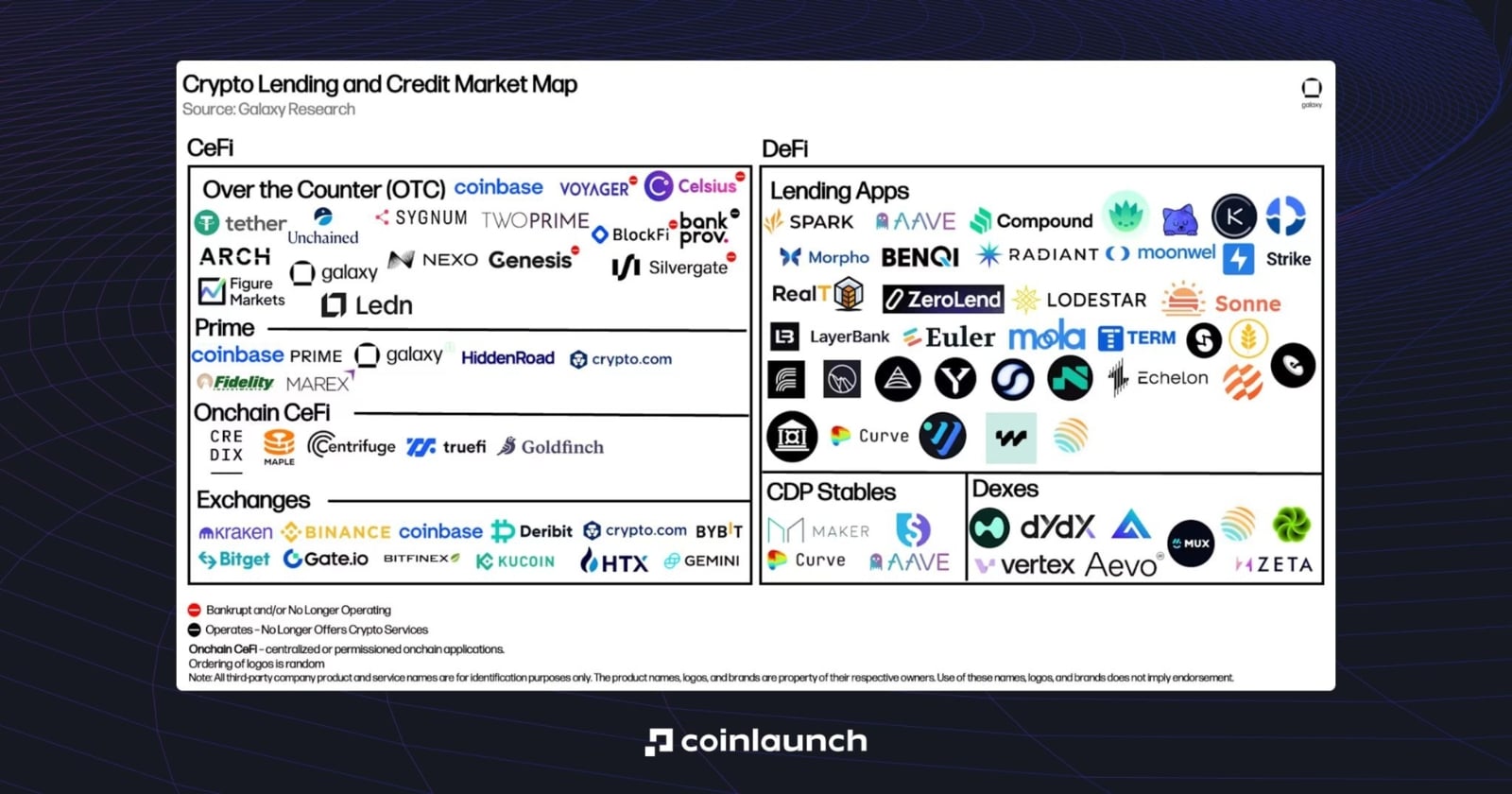
For deeper due diligence, rely on official sources. Visa and Galaxy have published analyses on onchain lending structures, offering a baseline for understanding institutional-grade protocols. Always cross-reference these insights with onchain data to ensure your risk models align with current market conditions.
Yield strategies and risk management
Leveraging an onchain crypto loan market research framework means treating borrowed capital as a tool, not a windfall. The most common strategy is arbitrage: borrowing at a low variable rate to fund higher-yield positions in staking or liquidity pools. While Coinbase Institutional notes that onchain lending usage hit record highs in late 2024, this growth masks significant volatility in borrowing costs [src-serp-2].
Interest rate models in decentralized finance are rarely static. A sudden surge in demand for a specific asset can spike rates overnight, turning a profitable arbitrage trade into a liability. To manage this, you must monitor the utilization ratio of the lending protocol. When utilization approaches 100%, rates tend to adjust upward sharply. If your yield spread falls below this new borrowing cost, the position becomes a drag on your portfolio rather than a source of income.
Liquidation risk is the other half of the equation. Most onchain loans require over-collateralization, but market crashes can erode your collateral value faster than you can react. Setting conservative loan-to-value (LTV) ratios provides a buffer against these flash crashes. Instead of maxing out your borrowing power, maintaining a lower LTV reduces the likelihood of forced liquidations during high-stress market conditions. This approach prioritizes capital preservation over maximum leverage, which is essential for long-term sustainability in the onchain lending landscape.
Frequently asked: what to check next
Helpful gear
Use these product recommendations as a starting point, then choose the size, material, and price point that fit how you actually use the gear.


As an Amazon Associate, we may earn from qualifying purchases.
No comments yet. Be the first to share your thoughts!