The onchain crypto loan strategy landscape
The onchain crypto loan strategy has moved beyond the basic mechanics of DeFi lending. What started as simple, over-collateralized money markets has evolved into a more sophisticated infrastructure capable of supporting AI-enhanced credit models. In 2026, the focus has shifted from merely locking up assets to optimizing yield through smarter risk assessment and liquidity management.
Traditional DeFi protocols required borrowers to lock up significantly more crypto than they borrowed to mitigate volatility. This model, while secure, was capital inefficient and limited the pool of viable borrowers. The current landscape introduces onchain private lending, which extends credit based on offchain assets or verified creditworthiness rather than just crypto collateral. This shift mirrors traditional finance practices but leverages blockchain transparency to reduce counterparty risk and improve capital efficiency.
This evolution is not just about better yields; it is about building a more resilient financial layer. By integrating AI-driven risk models, protocols can now offer more competitive rates to borrowers while maintaining strict oversight for lenders. The transparency of these onchain markets also serves as a real-time indicator of market positioning, allowing participants to gauge sentiment and liquidity trends with greater precision than ever before [Coinbase Institutional].
For investors and borrowers alike, understanding this new landscape is critical. The ability to leverage assets without selling them—similar to how wealthy households use buy-borrow-die strategies to avoid capital gains taxes—has become more accessible and efficient onchain. This section explores the tools and infrastructure driving this change, setting the stage for a deeper dive into specific strategies for 2026.
Core onchain crypto loan infrastructure
The 2026 lending landscape is no longer a single-monolith market. It has fractured into specialized infrastructure layers that serve different risk appetites. At the base are permissionless liquidity pools, where code dictates terms. Above them sit credit networks that layer offchain verification onto onchain rails. Understanding this stack is the first step in deploying capital or securing leverage without exposing your portfolio to unnecessary liquidation risk.
Aave: The Deep Liquidity Standard
Aave remains the primary venue for permissionless, overcollateralized lending. Its architecture is designed for high-volume liquidity aggregation, making it the default choice for borrowers who need immediate, non-custodial access to cash against their crypto holdings. The protocol’s strength lies in its stability and the sheer depth of its pools, which minimizes slippage for large deposits.
For lenders, Aave offers a straightforward yield source: the interest paid by borrowers. However, this yield is capped by the protocol’s utilization rate. When demand for borrowing outpaces supply, rates spike, attracting more capital until the equilibrium stabilizes. This mechanism ensures that lenders are compensated for risk, but it also means yields are volatile and tied directly to market sentiment. The platform’s open-source nature allows developers to build front-ends and tools on top of Aave’s smart contracts, creating a robust ecosystem of secondary services.
Morpho: Peer-to-Peer Efficiency
Morpho operates as a peer-to-peer layer on top of existing liquidity pools like Aave. Instead of relying solely on the pooled interest rate, Morpho matches individual lenders and borrowers directly. This peer-to-peer (P2P) matching allows lenders to earn higher yields than the base pool rate, while borrowers can secure lower interest rates than the pool’s average cost.
This structure introduces a new dynamic: credit risk is still managed by the underlying pool’s collateralization, but the pricing is negotiated between counterparties. For sophisticated users, Morpho offers a way to optimize their balance sheets. Lenders can choose to provide liquidity to specific P2P pairs that align with their risk tolerance, while borrowers can access more competitive terms without leaving the security of the underlying pool. It is essentially a marketplace within a market, adding efficiency to the broader lending infrastructure.
Galaxy One: Institutional-Grade Credit
For borrowers who cannot or do not want to lock up crypto collateral, the infrastructure shifts toward onchain private credit. Galaxy One represents this institutional tier, offering loans secured by offchain assets or creditworthiness rather than just onchain token deposits. This approach mirrors traditional finance, where loans are backed by real-world assets (RWA) or corporate balance sheets.
This model expands the addressable market for crypto lending beyond speculative asset holders. Institutions and high-net-worth individuals can leverage their existing portfolios without selling assets or facing the volatility of crypto-collateralized loans. The trade-off is complexity: these loans often involve offchain legal agreements and credit checks, introducing counterparty risk that is not present in purely onchain protocols. However, for those seeking to deploy capital at scale, this infrastructure provides the necessary bridge between traditional credit markets and onchain liquidity.
| Protocol | Lending Model | Primary Collateral | Yield Source | Target User |
|---|---|---|---|---|
| Aave | Permissionless Pool | Crypto Assets (Onchain) | Pool Interest Rate | Retail & DeFi Native |
| Morpho | P2P Matching Layer | Crypto Assets (Onchain) | Negotiated P2P Rate | Yield Optimizers |
| Galaxy One | Onchain Private Credit | Offchain Assets / Credit | Fixed/Variable Credit Rate | Institutions & High-Net-Worth |
AI tools for onchain credit scoring
Onchain private lending extends credit to businesses or institutions via blockchain protocols, usually without the 150% crypto-collateral requirement common in standard DeFi money markets. Instead, these loans are secured by offchain assets or the borrower's creditworthiness. This shift relies heavily on AI infrastructure to translate offchain financial health into onchain trust.
AI models analyze transaction histories, cash flow patterns, and other offchain data points to generate dynamic onchain credit scores. These scores allow lenders to assess risk more accurately than simple collateral ratios. By linking these scores with lending protocols, platforms can offer better terms to borrowers with strong financials, even if their onchain holdings are modest.
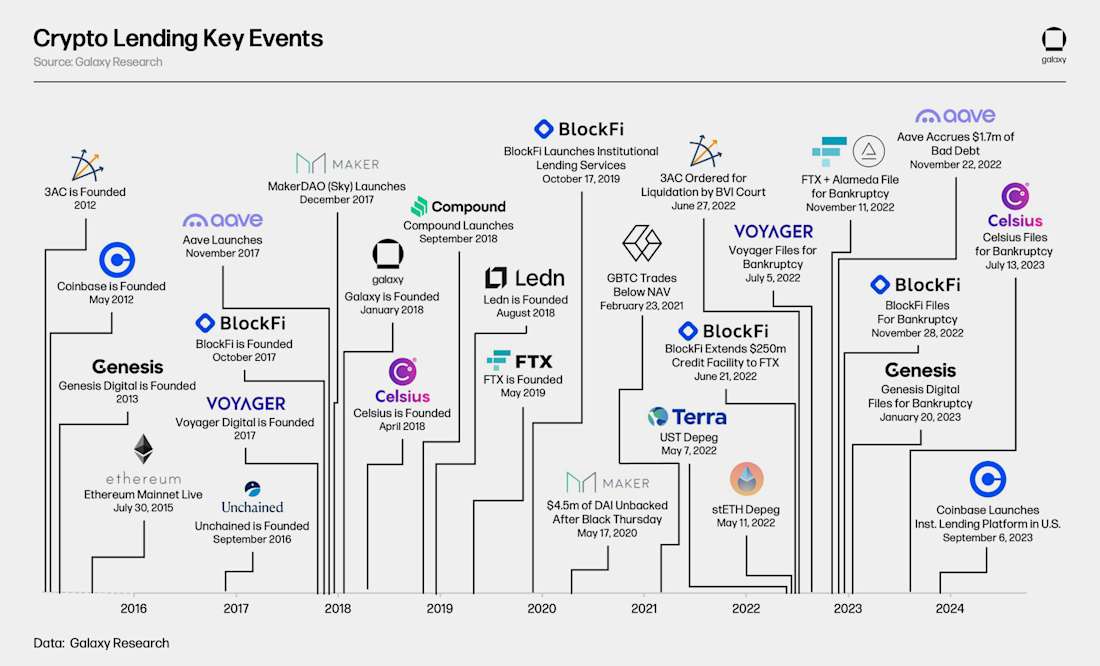
This approach improves liquidity and transparency in primary and secondary onchain debt markets. Lenders can link onchain scores with real-world performance data, creating a more robust credit profile. As a result, borrowers gain access to capital at lower costs, while lenders reduce their exposure to volatile crypto assets.
The integration of AI tools is transforming onchain lending from a purely collateral-based system to a credit-based one. This evolution mirrors traditional finance, where credit scores determine borrowing capacity. As these models mature, they will likely become the standard for institutional-grade onchain credit.
Yield optimization and risk management
Onchain lending offers yield, but leverage turns a good trade into a liquidation event. To manage this, you need to treat your loan strategy like a portfolio allocation, not a single bet. The goal is to capture the spread between your lending yield and borrowing cost without exposing your principal to smart contract failures or market crashes.
Manage collateralization ratios
Overcollateralization is your primary defense. Standard DeFi money markets often require 150% collateral, but onchain private lending extends credit without this rigid requirement, securing loans instead with offchain assets or creditworthiness source. This flexibility allows for better capital efficiency, but it shifts the risk model. You must monitor your loan-to-value (LTV) ratios closely. A drop in asset price can trigger liquidation if you are too close to the limit. Keep a buffer of at least 20% below your liquidation threshold to absorb volatility.
Diversify across protocols
Concentrating your funds in one protocol exposes you to single-point-of-failure risks. Smart contract bugs happen. By spreading your capital across multiple lending platforms, you reduce the impact of any one protocol being compromised. Look for platforms with audited code and a history of stable operations. The transparency of onchain lending markets also makes them a useful indicator for market positioning, allowing you to gauge sentiment before committing large sums source.
Use stablecoins for yield
Borrowing volatile assets to lend stablecoins (or vice versa) introduces basis risk. The most reliable yield optimization comes from lending stablecoins against stable assets or blue-chip collateral like Bitcoin. This minimizes the correlation risk between your collateral and your loan obligations. Avoid leveraging into highly volatile altcoins unless you have a specific, short-term arbitrage opportunity and the risk capital to lose.
Essential onchain crypto loan tools
Executing an onchain loan strategy requires more than just a wallet; it demands a stack of specialized infrastructure. The landscape in 2026 has shifted from simple DeFi lending to hybrid models that blend onchain transparency with offchain credit assessment. To manage this complexity, you need tools that handle collateralization, risk monitoring, and secure execution.
Onchain Lending Protocols
For borrowers seeking liquidity without selling assets, onchain private lending protocols are becoming the primary vehicle. Unlike standard DeFi money markets that typically require 150% crypto collateral, these protocols extend credit based on creditworthiness or offchain assets, allowing for more efficient leverage. Platforms like Aave and Compound remain staples for overcollateralized loans, but newer entrants are focusing on undercollateralized, credit-based lines for institutional players. When using these protocols, always verify the smart contract audits and insurance fund status before depositing collateral.
Risk and Collateral Monitoring
Managing liquidation risk is the most critical part of any leveraged position. You need real-time dashboards that track your Loan-to-Value (LTV) ratio across multiple chains. Tools like DeFi Llama and Nansen provide aggregated views of your positions, alerting you to price drops or protocol vulnerabilities before they trigger a liquidation. For individual traders, setting up automated alerts via platforms like Zerion or RabbitHole ensures you never miss a margin call, even when you are offline.
Security Infrastructure
The higher the leverage, the greater the attack surface. Securing your private keys and transaction approvals is non-negotiable. Hardware wallets from Ledger or Trezor provide the cold storage foundation, while transaction simulation tools like Revoke.cash help you review and limit smart contract permissions before signing. For high-value loans, consider using a multi-signature wallet setup to prevent single-point failures in your authorization process.

Hardware Wallets and Security Tools
Managing onchain loan collateral requires robust security to protect your assets from smart contract exploits and phishing attacks. Hardware wallets are the first line of defense, keeping your private keys offline and isolated from internet-connected devices. For those actively managing leveraged positions, selecting a wallet with strong dApp browser support and multi-chain compatibility is essential for seamless interaction with lending protocols. Look for devices that support secure element chips and offer open-source firmware for transparency.



As an Amazon Associate, we may earn from qualifying purchases.
Frequently asked questions about onchain lending
What is the onchain lending protocol?
Onchain private lending extends credit to businesses or institutions via blockchain protocols, typically bypassing the standard 150% crypto-collateral requirement found in open DeFi money markets. Instead, these loans are secured by offchain assets or the borrower's creditworthiness, allowing for more flexible capital deployment. This approach bridges traditional finance structures with onchain efficiency, as noted by Chainlink in their February 2026 analysis of private lending models.
Do wealthy people use collateralized loans?
High-net-worth individuals frequently use asset-backed loans to access liquidity without triggering capital gains taxes. By borrowing against the growing value of their assets, they can fund lifestyle expenses or new investments while retaining ownership of the underlying holdings. Since borrowed money is not considered taxable income, this "buy, borrow, die" strategy remains a cornerstone of wealth preservation and tax efficiency.
How do onchain credit scores work?
Onchain credit scores aggregate transaction history and wallet behavior to assess borrower risk, improving transparency in primary and secondary debt markets. Lenders can link these scores to loan terms, enabling dynamic pricing based on verified onchain activity rather than traditional credit bureau data. This system aims to reduce default rates and increase liquidity for borrowers with strong digital footprints but limited traditional credit history.
No comments yet. Be the first to share your thoughts!