The shift from CeFi to open credit
The architecture of institutional finance is undergoing a structural migration. For years, centralized finance (CeFi) platforms dominated crypto lending by offering a familiar user experience: deposit collateral, borrow against it, and pay interest. While these platforms provided liquidity, they introduced significant counterparty risk and opaque balance sheets. In 2026, the preference is shifting toward onchain crypto loan infrastructure, where the lending protocol itself acts as the intermediary rather than a corporate entity.
This shift is driven by economics and transparency. According to Aave, on-chain stablecoin borrow costs have averaged 4-6% over the last year, significantly lower than the 8-12% typical of centralized crypto-backed products or personal loans. This cost advantage stems from the removal of intermediary margins and the ability to source liquidity directly from global capital markets. For AI-native actors and institutional desks, this efficiency is not just a preference but a operational necessity.
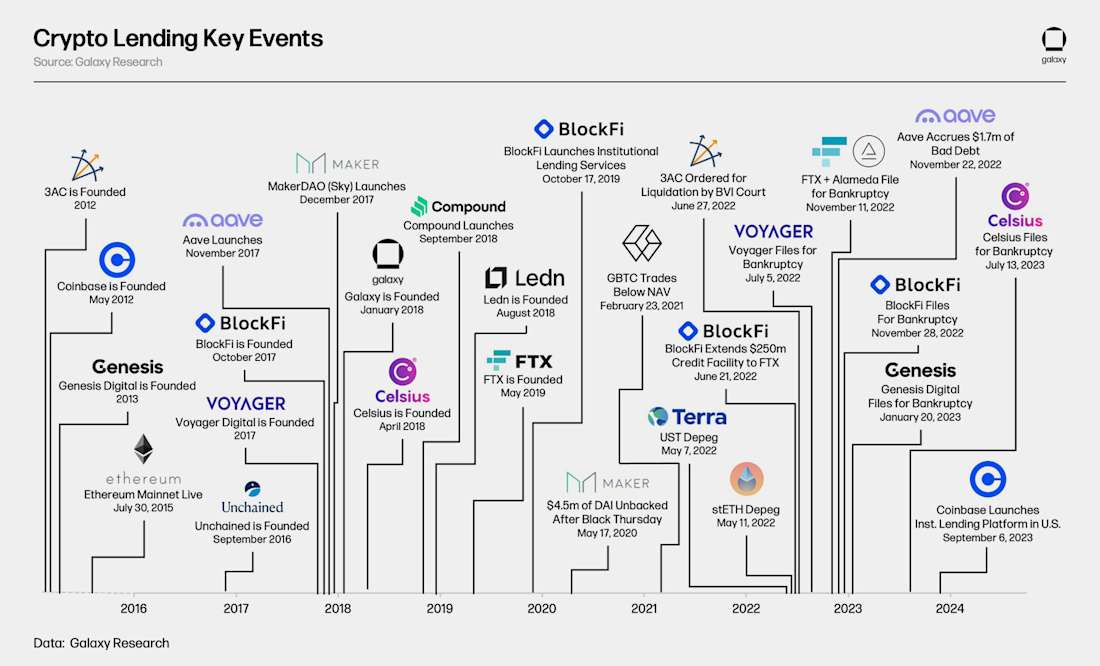
Galaxy Research notes that many modern entities are building their entire business models onchain, leveraging these open protocols for their core lending activities. The infrastructure allows for real-time collateral monitoring and instant liquidation without the latency or hidden fees associated with traditional banking rails. As the market matures, the distinction between "crypto lending" and "traditional finance" is blurring, with the latter increasingly adopting onchain rails for their speed and auditability.
Core lending models and protocols
Onchain crypto loan infrastructure has split into two distinct camps: overcollateralized systems that rely on excess digital assets, and the emerging undercollateralized models that leverage real-world data. Understanding this structural divide is essential for navigating 2026's lending landscape.
Overcollateralized lending remains the dominant paradigm for decentralized finance. Protocols like Aave and Morpho require borrowers to lock up more value in crypto assets than they wish to borrow. This safety buffer protects lenders against market volatility, ensuring that even if asset prices drop sharply, the loan remains covered. While this model offers instant liquidity and permissionless access, it ties up capital inefficiently. Borrowers must post significant collateral to secure relatively small loans, limiting the total addressable market to those holding substantial digital assets.
In contrast, undercollateralized or private lending models are gaining traction by using external data to assess creditworthiness. Chainlink’s infrastructure enables onchain private lending by connecting smart contracts with real-world financial data. This allows lenders to issue uncollateralized or undercollateralized loans based on offchain credit scores, income verification, or business performance. This approach mirrors traditional banking but operates onchain, opening credit to users who lack large crypto holdings but have verifiable financial history.
The choice between these models depends on risk tolerance and borrower profile. Overcollateralized loans are faster and more accessible for crypto natives, while undercollateralized loans offer better capital efficiency for creditworthy individuals and institutions. As infrastructure matures, we expect to see hybrid models that blend both approaches.
| Model | Collateral | Typical Rate | Target Users |
|---|---|---|---|
| Overcollateralized | Crypto assets (110%+) | 4-6% | Crypto natives, DeFi traders |
| Undercollateralized | Credit data / None | Variable (risk-based) | Institutions, creditworthy individuals |
AI-Ready Lending Infrastructure
To let AI agents execute loans without human intervention, you need infrastructure that speaks machine-to-machine. This means APIs that are predictable, oracles that provide real-time data, and smart contract modules that handle logic securely. The goal is to remove the human bottleneck from the lending stack.
Oracles as the Nervous System
AI agents cannot make lending decisions without accurate, real-time pricing. If an agent needs to liquidate a position the moment a collateral ratio drops, it relies on oracles to feed it that data. Chainlink provides the decentralized oracle networks that supply this critical price data. Without these feeds, an AI agent is flying blind, unable to distinguish between a market dip and a solvency crisis.
Composable Lending Modules
Protocols like Morpho and Aave have moved beyond simple lending pools to offer composable modules. These are smart contract snippets that AI agents can interact with directly. Instead of navigating complex user interfaces, an agent calls these modules to supply collateral, borrow assets, or manage interest rates. This flexibility allows AI agents to optimize yield or manage risk across multiple protocols simultaneously.
APIs for Agent Control
Finally, AI agents need robust APIs to monitor loan health and trigger actions. These APIs expose the state of onchain loans, allowing agents to monitor collateralization ratios, interest accrual, and liquidation thresholds. By integrating with these interfaces, AI agents can autonomously manage portfolios, rebalancing assets or adding collateral before a liquidation event occurs. This creates a self-sustaining loop where AI agents drive liquidity and efficiency in onchain crypto loan infrastructure.
Risk management and collateral dynamics
Use this section to make the Onchain Crypto Loan Infrastructure decision easier to compare in real life, not just on paper. Start with the reader's actual constraint, then separate must-have requirements from details that are merely nice to have. A practical choice should survive normal use, maintenance, timing, and budget. If a recommendation only works in an ideal situation, call that out plainly and give the reader a fallback path.
The simplest way to use this section is to write down the must-have criteria first, then compare each option against those criteria before weighing nice-to-have features.
Where the market is heading next
The trajectory of onchain crypto loan infrastructure is shifting from speculative yield farming toward institutional-grade utility. The convergence of Real World Assets (RWA) and AI-driven credit assessment is transforming how capital is allocated. Stablecoins have evolved from mere trading tools into foundational infrastructure, powering a lending space that is now deeply integrated with traditional finance rails.
AI models are beginning to analyze offchain data to assess borrower risk in real time, allowing protocols to offer lower rates to verified entities. This shift is critical as the market moves beyond simple overcollateralized loans toward undercollateralized credit lines backed by real-world revenue streams. Platforms like Aave and Morpho are already experimenting with these hybrid models, blending onchain liquidity with offchain credit scores.
Galaxy Research notes that the next wave of growth will be defined by entities that build their entire business onchain infrastructure, rather than just using it as a backend. This means onchain crypto loan infrastructure will increasingly look like a parallel banking system, complete with sophisticated risk engines and automated compliance layers.


As an Amazon Associate, we may earn from qualifying purchases.
No comments yet. Be the first to share your thoughts!